If you are considering dental implants, one of your first questions is probably about cost. Patients often want to know how much a single implant costs, whether insurance will help, and how the price changes when replacing several teeth or an entire arch.
The honest answer is that the cost of dental implants in East Wenatchee depends on your individual needs. Dental implant treatment is not one standardized procedure with one universal price. The number of teeth being replaced, the health of your jawbone, the type of restoration selected, and whether you need preparatory treatment can all affect the final investment.
At Fluegge Family Dentistry, we understand that cost is an important part of the decision. Our goal is to help East Wenatchee patients understand their options, compare long term value, and choose treatment that fits their health needs, priorities, and budget.
What Is Included in the Cost of a Dental Implant?
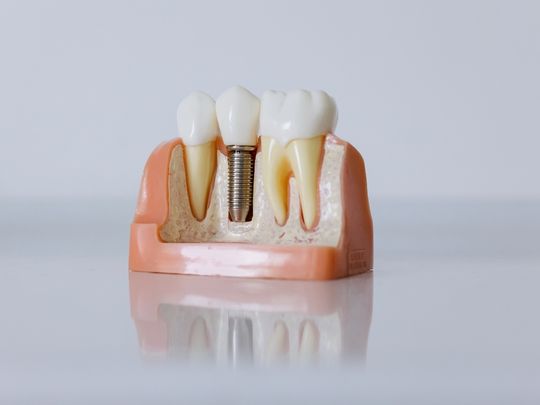
A dental implant is more than the visible replacement tooth. It is a complete tooth replacement system made up of several components.
The implant itself is a small post that is placed in the jawbone. It serves as an artificial tooth root and helps support the final restoration. An abutment connects the implant to the replacement tooth. The visible portion may be an individual crown, an implant supported bridge, or a full arch restoration.
Because each part plays a different role, an implant estimate may include several separate fees. These can include the consultation, diagnostic imaging, implant placement, abutment, temporary restoration, final crown or bridge, and follow up visits.
When comparing estimates, patients should ask whether the quoted amount includes the complete process. A price that appears unusually low may cover only the implant post and not the final tooth, imaging, sedation, or other necessary services.
How Much Does a Single Dental Implant Cost in East Wenatchee?
The cost of replacing one tooth with a dental implant can vary significantly. Nationally, the total cost of a single implant, abutment, and crown is often several thousand dollars. However, your actual cost in East Wenatchee will depend on the details of your case.
For example, a patient who has recently lost a tooth and has healthy bone may need a relatively straightforward implant procedure. Another patient may have been missing the tooth for years and may require bone grafting before an implant can be placed safely.
The location of the missing tooth can also affect treatment. Front teeth often require careful planning to achieve a natural shape, gumline, and overall esthetics. Back teeth must be designed to withstand substantial chewing forces. Each situation requires a personalized approach.
For this reason, the best way to obtain an accurate estimate is through an examination and appropriate imaging at Fluegge Family Dentistry. A personalized evaluation allows the dental team to identify all expected costs before treatment begins.
What Factors Affect Dental Implant Pricing?
Several factors influence the total cost of implant treatment. Understanding these variables can help you make sense of your estimate and avoid comparing treatments that are not truly equivalent.
The Number of Teeth Being Replaced
Replacing one tooth generally costs less than replacing several teeth or a complete arch. However, you may not need one implant for every missing tooth.
For example, two or more implants may support a dental bridge that replaces several adjacent teeth. A carefully designed full arch restoration can replace an entire row of teeth using a limited number of strategically positioned implants.
The right number of implants depends on your bone quality, bite, anatomy, and the type of restoration being planned.
Bone Grafting
Dental implants rely on the jawbone for support. After a tooth is lost, the surrounding bone may gradually shrink because it is no longer stimulated by the tooth root.
If there is not enough bone to support an implant, bone grafting may be recommended. Some grafting procedures can be completed at the same time as implant placement, while others require a healing period before the implant can be placed.
Bone grafting adds to the cost of treatment, but it may be essential for creating a stable foundation and improving the long term predictability of the implant.
Tooth Extraction
If a damaged or failing tooth is still present, it may need to be removed before implant treatment. The complexity of the extraction affects the cost. A simple extraction is generally less involved than removing a fractured tooth or a tooth that has broken beneath the gumline.
In selected cases, an implant may be placed immediately after the tooth is removed. In other situations, the site needs time to heal first.
Diagnostic Imaging and Treatment Planning
Modern implant dentistry often uses detailed digital imaging to evaluate the jawbone, tooth position, nerves, sinuses, and other anatomical structures. This information helps the dentist plan the implant’s size, angle, and location.
Advanced planning is an important part of safe, predictable treatment. While imaging contributes to the overall cost, it can reduce uncertainty and support a more precise procedure.
The Type of Final Restoration
A single implant crown, implant supported bridge, removable implant overdenture, and fixed full arch restoration are very different treatments.
The materials used also matter. The final restoration must be strong enough to function properly while also looking natural. More advanced materials and highly customized laboratory work may increase the fee, particularly for teeth that are visible when you smile.
Sedation and Comfort Options
Some implant procedures can be completed with local anesthesia alone. Patients who experience dental anxiety or who are having more extensive treatment may benefit from additional comfort or sedation options.
The type of sedation selected can affect the cost. Your dental team can discuss the available options and help determine what is appropriate for your health and procedure.
How Much Do Full Arch Implants Cost?
Full arch implant treatment replaces most or all of the teeth in the upper jaw, lower jaw, or both. Because it involves multiple implants and a larger custom restoration, the cost is higher than replacing a single tooth.
However, full arch treatment is often more efficient than placing a separate implant for every missing tooth. A fixed bridge may be supported by four, five, six, or another appropriate number of implants, depending on the patient’s needs.
The cost of full arch implants in Wenatchee and East Wenatchee depends on several factors, including:
- Whether treatment is needed in one arch or both
- How many implants are required
- Whether extractions are necessary
- The amount and quality of available bone
- Whether bone grafting is needed
- The type of temporary restoration
- The materials used for the final teeth
- Whether the restoration is removable or fixed
Because full arch cases vary so much, broad online price ranges may not reflect what you personally need. A detailed treatment plan is necessary to understand the true investment.
What Are All on 4 Dental Implants?
All on 4 is a treatment concept in which a complete arch of replacement teeth is supported by four dental implants. The implants are positioned strategically to maximize available bone and create a stable foundation for the restoration.
Patients searching for all on 4 implants in East Wenatchee are often looking for an alternative to traditional removable dentures. In appropriate cases, this approach can provide a fixed set of teeth that does not need to be removed each night.
It is important to understand that not every full arch implant case uses exactly four implants. Some patients benefit from additional implants based on bone quality, bite forces, anatomy, or the design of the final restoration.
The term All on 4 is often used broadly in advertising, but the ideal number and position of implants should be based on a thorough clinical evaluation rather than a predetermined package.
All on 4 vs Dentures: How Do the Costs Compare?
When comparing all on 4 vs dentures, traditional dentures usually have the lower initial cost. They do not require implant surgery and can often be completed more quickly.
However, initial price is only one part of the comparison.
Traditional dentures rest on the gums and underlying bone. They may move during eating or speaking, particularly in the lower jaw. As the jawbone changes over time, dentures may need adjustments, relining, repair, or replacement.
Implant supported full arch teeth are anchored to implants placed in the jaw. They can provide greater stability, improved chewing ability, and a feeling that is closer to natural teeth. They also reduce many of the concerns associated with loose or shifting dentures.
A fixed All on 4 style restoration generally costs considerably more than a conventional denture. The higher fee reflects the surgical treatment, implants, components, temporary teeth, laboratory work, and final restoration.
For some patients, the increased confidence, function, and stability make the investment worthwhile. Others may prefer a lower cost implant overdenture, which uses implants for support but remains removable for cleaning.
Are Implant Supported Dentures a More Affordable Option?
Implant supported dentures can provide a middle ground between conventional dentures and fixed full arch teeth.
Instead of resting entirely on the gums, the denture connects to dental implants. This can improve retention and reduce movement while eating or speaking. Because the restoration is still removable, it may require fewer implants and less complex laboratory work than a fixed bridge.
For patients who want more stability but are not ready to invest in fixed full arch implants, an implant overdenture may be worth considering.
The cost depends on the number of implants, the condition of the existing denture, and whether a new denture must be created. In some cases, an existing denture can be modified, but this is not always recommended or possible.
Does Dental Insurance Cover Implants?
Dental insurance coverage for implants varies widely. Some plans provide partial benefits for implant treatment, while others exclude implants or classify them as an optional service.
Even when implants are covered, the plan may have an annual maximum that limits how much the insurance company will pay during a calendar year. The annual maximum may be significantly lower than the total cost of implant treatment.
Coverage may also be divided among different parts of the procedure. For example, the plan may contribute toward the extraction, implant crown, or bone graft but not the implant itself.
Medical insurance occasionally provides benefits when implant related treatment is connected to an accident, congenital condition, reconstructive surgery, or another qualifying medical circumstance. This is less common and depends on the individual policy.
The team at Fluegge Family Dentistry can help you understand your dental benefits and estimate your expected out of pocket portion. However, insurance companies ultimately determine coverage after reviewing the claim.
Can You Use an HSA or FSA for Dental Implants?
In many cases, patients can use health savings account or flexible spending account funds for eligible dental implant expenses.
These accounts allow you to use pretax money for qualified healthcare costs. Depending on your plan, eligible expenses may include examinations, X-rays, extractions, bone grafting, implant placement, crowns, bridges, and dentures.
FSA funds may have annual deadlines or rollover limitations, so timing can be important. HSA funds generally remain in the account and can be carried forward.
Patients should confirm eligibility with their plan administrator or tax advisor, especially when coordinating treatment across different calendar years.
Are Dental Implants Worth the Cost?
Dental implants often require a larger initial investment than removable tooth replacement options. However, they are designed to provide long term function and stability.
An implant does not rely on neighboring teeth for support in the same way as a traditional bridge. This can help preserve healthy tooth structure. Implants also stimulate the surrounding jawbone, which may help reduce bone loss in the area of the missing tooth.
Many patients appreciate being able to eat, speak, and smile with greater confidence. A well planned implant restoration can look and feel natural, particularly when it is maintained with excellent oral hygiene and regular dental care.
Implants are not maintenance free. The restoration can wear, chip, loosen, or eventually need replacement, even when the implant remains healthy. Gum disease, smoking, uncontrolled diabetes, poor hygiene, teeth grinding, and missed dental visits may increase the risk of complications.
When comparing cost, it is helpful to consider not only the initial fee but also the expected durability, function, maintenance, and effect on your quality of life.
Why the Cheapest Implant Option May Not Be the Best Value
Dental implant advertising sometimes focuses on a very low starting price. These offers may not include all the services needed to complete treatment.
Before selecting a provider based on cost alone, ask what the estimate includes. Does it cover diagnostic imaging, the implant, abutment, temporary tooth, final restoration, follow up visits, and any necessary grafting? What materials will be used? Who will complete each phase of treatment? What happens if additional procedures are discovered after treatment begins?
Implants require careful diagnosis, surgical planning, restorative design, and long term maintenance. Choosing treatment based only on the lowest fee can create unexpected costs or compromises later.
A clear, comprehensive treatment plan provides a more meaningful way to compare options.
How to Make Dental Implants More Affordable
The first step is to understand all of your treatment choices. There may be more than one clinically appropriate way to replace your missing teeth.
For example, a patient missing several adjacent teeth may be able to replace them with an implant supported bridge instead of individual implants. A patient considering fixed full arch implants may also want to compare an implant overdenture. Treatment may sometimes be divided into phases so that costs are spread over time.
Dental insurance, HSA or FSA funds, and financing options may also make treatment more manageable. The team at Fluegge Family Dentistry can review the expected fees and discuss available financial arrangements before you make a decision.
Affordability should not mean choosing treatment that does not meet your needs. The goal is to find the right balance of health, durability, function, comfort, and cost.
What Happens During a Dental Implant Consultation?
Your implant consultation is the starting point for determining whether you are a candidate and how much treatment is likely to cost.
The dentist will evaluate your teeth, gums, bite, medical history, and the area where the implant may be placed. Diagnostic imaging may be recommended to assess bone volume and identify important anatomical structures.
You will also have an opportunity to discuss your goals. Some patients are replacing one missing tooth. Others have struggled with loose dentures for years and are interested in all on 4 implants in East Wenatchee. Some want to understand the difference between removable and fixed full arch implants in the Wenatchee area.
After gathering the necessary information, the dentist can explain your options, anticipated treatment sequence, expected healing time, and estimated costs.
Frequently Asked Questions About Dental Implant Costs
Is one implant needed for every missing tooth?
Not always. One implant commonly replaces one missing tooth, but multiple teeth can sometimes be replaced with an implant supported bridge. A full arch restoration can also be supported by several strategically placed implants.
Are All on 4 implants less expensive than individual implants?
Replacing an entire arch with an All on 4 style restoration is generally more efficient and less costly than placing an individual implant for every missing tooth. However, it remains a complex treatment and costs more than a traditional denture.
Are dentures cheaper than full arch implants?
Traditional dentures usually have a lower upfront cost. Full arch implants typically provide greater stability and chewing function but require a larger investment.
Will I receive temporary teeth during treatment?
Many patients receive a temporary restoration while the implants heal. The type of temporary teeth depends on the treatment plan, implant stability, bite, and overall health of the surgical site.
How long do dental implants last?
The implant post is designed to provide long term support and may last for many years with proper care. The crown, bridge, attachment components, or full arch restoration may eventually require maintenance or replacement due to normal wear.
Can smokers receive dental implants?
Some smokers can receive implants, but smoking increases the risk of delayed healing, infection, bone loss, and implant failure. Reducing or stopping tobacco use can improve the chances of a successful outcome.
Does age affect implant candidacy?
There is no strict upper age limit for dental implants. Overall health, bone quality, healing ability, and the ability to maintain the restoration are usually more important than age alone.
Get a Personalized Dental Implant Estimate in East Wenatchee
Online cost estimates can provide a general starting point, but they cannot account for your bone health, number of missing teeth, treatment goals, or the type of restoration you need.
Whether you are considering a single implant, an implant supported denture, All on 4 implants in East Wenatchee, or fixed full arch implants near Wenatchee, a personalized evaluation is the best way to understand your options.
Our dentist in East Wenatchee can examine your oral health, explain the difference between All on 4 vs dentures, and develop a treatment plan based on your individual needs. You will receive a clearer understanding of the anticipated process, costs, and long term maintenance before moving forward.
Contact Fluegge Family Dentistry in East Wenatchee, WA to schedule a dental implant consultation and take the next step toward restoring your smile, comfort, and confidence.